88% Never Catch Up: The Alarming Truth About Third Grade Reading
By the end of third grade, children make a critical transition: from learning to read → to reading to learn. But for millions of students, this...
K-12Discover how Readable English is transforming reading instruction |
PROGRESS MONITORINGEasily assess and monitor growth with data-driven insights and reporting tools |
PROFESSIONAL SERVICESDiscover the services that support your success, from virtual training to expert coaching |
INDIVIDUALSStrengthen your reading skills with an interactive app tailored to your learning needs |
PARENTSEmpower your child's reading journey with an interactive app and expert strategies for home support |
|
|
Rethinking Reading: How One District Transformed Instruction (SmartBrief)Discover how a bold shift in reading instruction helped struggling learners thrive - and the critical role Readable English played in their success.
|
RESEARCH & RESULTSExplore peer-reviewed studies and real-world case studies on Readable English in action |
BLOGExplore articles on feature highlights, research deep-dives, and the latest literacy insights |
EBOOKDownload the ebook Why Learning to Read English is So Hard and how to Make it Easier |
CUSTOMER STORIESDiscover how educators and administrators are transforming literacy with Readable English |
RESOURCE AND PRODUCT ENABLEMENT LIBRARYFind essential educational references and instructional materials to enhance teaching |
FAQSFind essential educational references and instructional materials to enhance teaching |
NEWS & EVENTSStay up to date with media coverage, webinars, and upcoming events featuring Readable English |
|
|
Rethinking Reading: How One District Transformed Instruction (SmartBrief)Discover how a bold shift in reading instruction helped struggling learners thrive - and the critical role Readable English played in their success. |
1 min read
Anna Boyle
:
March 23, 2026
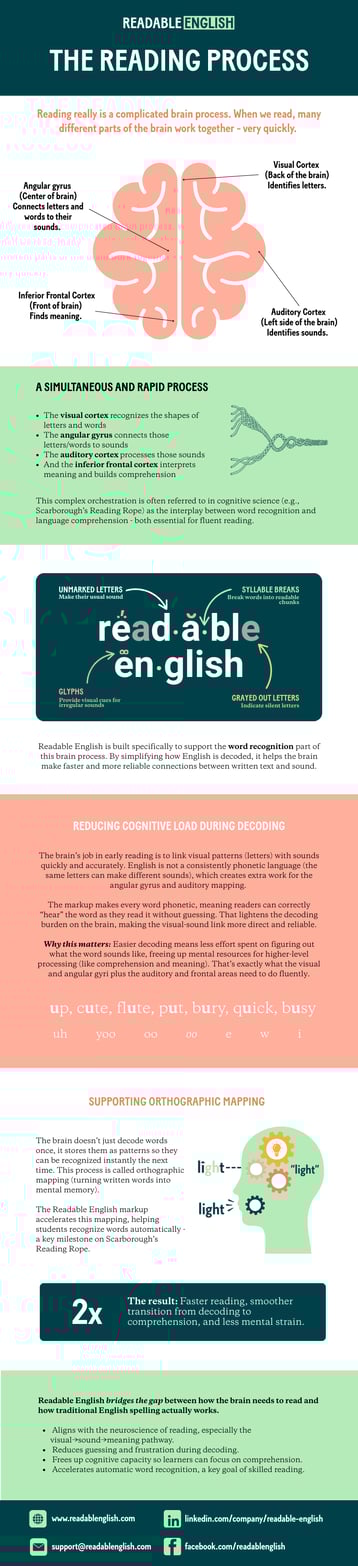
BReading is often taken for granted, but it is actually a simultaneous and rapid brain process. To transition from a struggling reader to a fluent one, the brain must coordinate several specialized areas instantly.
Download the Infographic as PDF.

According to the neuroscience of reading, our brains rely on a specific "Visual-Sound-Meaning" pathway:
Visual Cortex: Identifies the shapes of letters and words.
Angular Gyrus: The "hub" that connects those letters to their corresponding sounds.
Auditory Cortex: Processes those sounds.
Inferior Frontal Cortex: The final stop where the brain finds meaning and builds comprehension.
English is not a consistently phonetic language. When a student encounters irregular sounds, it creates an "extra work" burden for the brain. This high cognitive load during decoding means the brain has fewer resources left for understanding the text.
Readable English is built to support orthographic mapping—the process the brain uses to store words for instant recognition. By using a unique markup system (including glyphs for irregular sounds and grayed-out silent letters), we make every word phonetic.
This results in:
Faster Reading: Smoother transitions from decoding to meaning.
Less Frustration: No more guessing games for students.
Better Comprehension: Freeing up mental capacity to focus on the story, not just the sounds.
Understanding the neuroscience of reading is the first step toward transforming how we teach it. If you are ready to see how Readable English can accelerate automatic word recognition in your classroom or home, we are here to help. Contact us to schedule a live demo, or feel free to browse our resource library for more insights into the Science of Reading and orthographic mapping.
By the end of third grade, children make a critical transition: from learning to read → to reading to learn. But for millions of students, this...
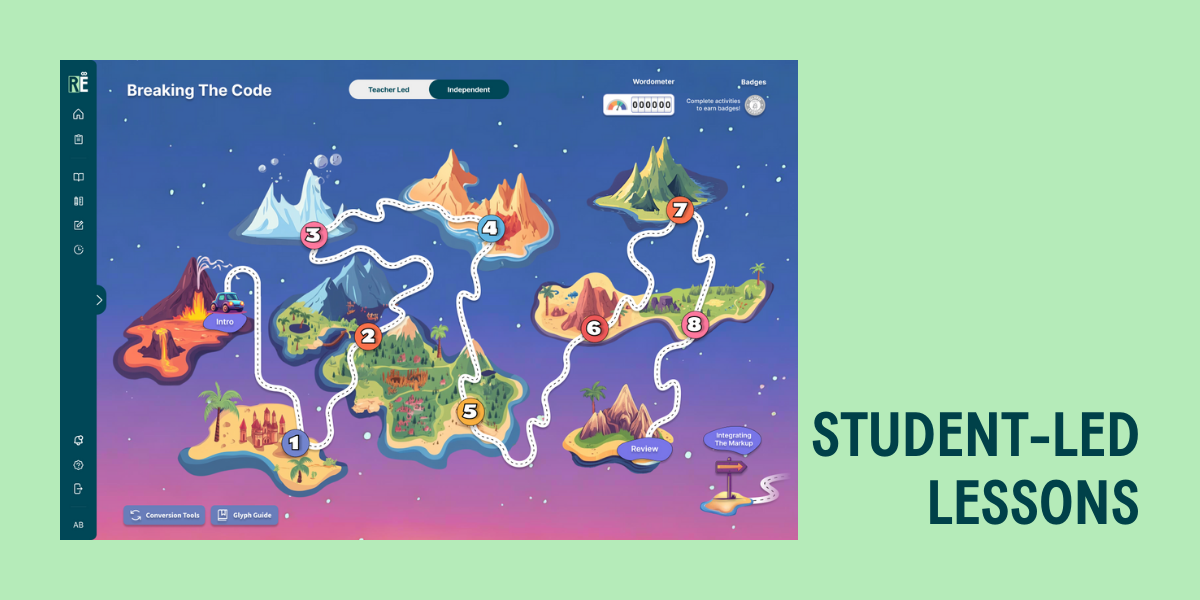
Empowering students to take ownership of their learning is one of the most effective ways to foster literacy, confidence, and long-term success. The ...
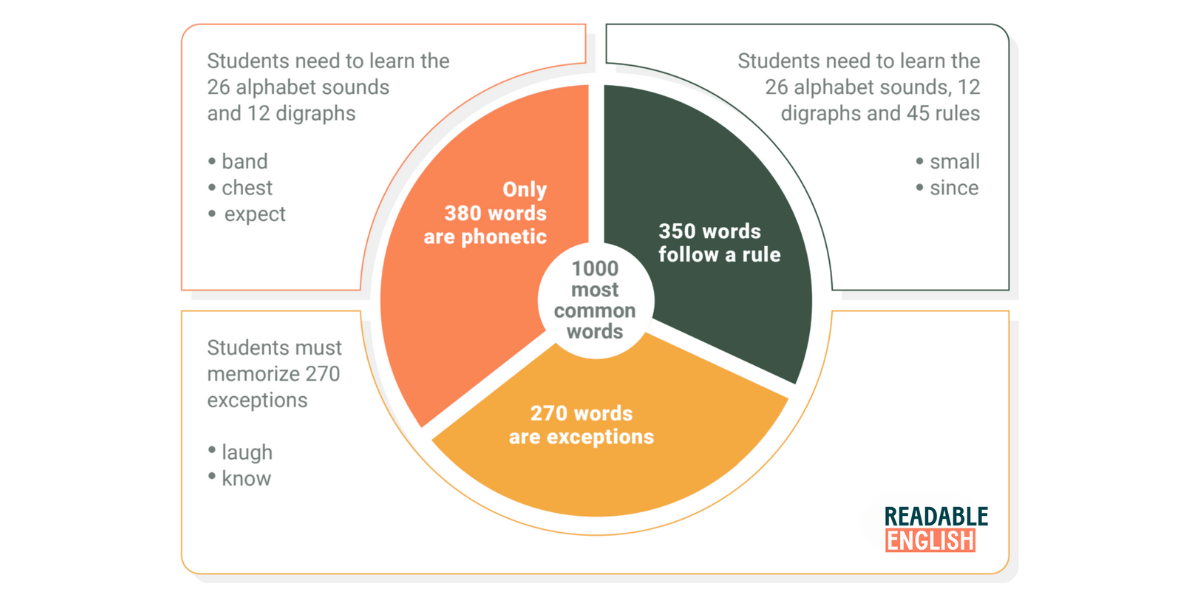
If you've ever watched a beginning reader struggle through an unfamiliar word, you've witnessed the importance of decodability firsthand. Decodable...