Unlock Reading Success for Students with Dyslexia and Complex Learning Needs
A research-backed, explicit visual decoding system designed to bypass orthographic barriers, eliminate guessing, and accelerate Tier 2/3 literacy interventions.
The Problem: Why English is Uniquely Hard for Dyslexic Readers
Traditional Phonics Alone Isn't Always Enough for Struggling Readers
For students with dyslexia, Specific Learning Disabilities (SLD), or severe Tier 2/3 reading deficits, English orthography presents an overwhelming cognitive load. With 26 letters making over 44 sounds through more than 200 spelling combinations, English is one of the most complex alphabetic codes in the world.
When readers struggle to map speech sounds (phonemes) to irregular letter combinations (graphemes), they encounter:
Frequent Hesitation & Frustration: Excessive mental energy spent sounding out non-phonetic words.
Bad Habit Reliance: Over-reliance on context clues, picture guessing, or sound substitution.
Decoding Exhaustion: So much cognitive effort goes into deciphering the words that zero mental capacity remains for comprehension.
How Readable English Works for SLD & Tier 2/3
Making English Phonetic Without Changing the Words
Developed by a Reading Specialist with over 25 years of clinical experience, Readable English provides a built-in visual pronunciation guide over standard text. It aligns directly with the Science of Reading and Structured Literacy principles by providing explicit, systematic, and cumulative support.
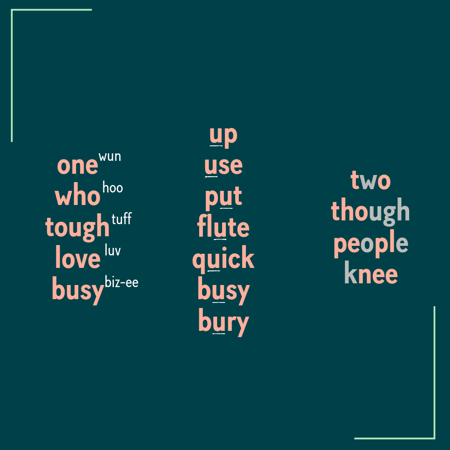
21 Intuitive Glyphs: Clearly indicate irregular letter sounds so students never have to guess.
Syllable Breaks: Break complex, multi-syllabic words into manageable, readable chunks.
Grayed-Out Silent Letters: Visually signal silent letters (e.g., the 'k' in know or 'g' in sign).
Unmarked Letters: Make their usual sound, reinforcing foundational phonics rules.
Key Benefits for Interventionists & Special Educators
Built for Tier 2, Tier 3, and Special Education Classrooms
Rapidly Reaches the Decoding Threshold: Enables students to access grade-level vocabulary and text much faster than traditional phonics intervention alone.
Reduces Cognitive Load: By simplifying word recognition, students shift brainpower from struggling over letters to understanding meaning and context.
Eliminates Guessing Habits: Removes sound additions, omissions, and word substitutions by making every letter-sound relationship transparent.
Built-In Lexile Progress Monitoring: Integrates MetaMetrics progress tracking to measure oral reading fluency and accuracy in real-time.
Restores Confidence & Joy: Turns reading struggle into immediate success—students move from avoiding text to actively participating in class reading.
"Based on theory and data, I can recommend Readable English in the strongest possible terms. It has the power to transform the teaching of English."
Readable English is specifically tailored for K-12 students who:
Have an IEP or 504 plan for Dyslexia or Specific Learning Disability (SLD).
Receive Tier 2 or Tier 3 RTI/MTSS reading interventions.
Consistently skip words, add/omit sounds, or guess based on first letters.
Possess strong verbal comprehension and listening skills but lag significantly in written decoding.
Suffer from reading fatigue, anxiety, or low academic confidence.
The glyphs and the different games/strategies are very deliberate and effective. Naomi gets very excited to see her word score go up weekly. The portal user experience is intuitive and a great fit for our family.
We are fortunate to have found this program and excited about sharing our positive experience with other families struggling with learning to read.
Holly Talbot Parent
When Dereck was introduced to Readable English the summer before 4th grade, he was at a 2nd grade reading level. When he started school in the fall, he was assessed at a 4th grade reading level.
Readable English has improved the opportunities and possibilities Dereck will have in his life.
Annette Milne Parent
My son really struggled with English and subjects that involved having to read significant amounts. Readable English has made a world of difference - he is now confident to read aloud and understands the meanings of words as well.
Melita Watts Parent
Eliza is an EL coordinator within a high school. There are many EL students needing support with their reading and pronunciation. Eliza will use the student self-paced implementation model, so that students at different EL proficiency levels can learn the glyphs at their own pace. After learning the glyphs, Eliza will support students in the flexible implementation style where the focus is converting relevant materials into Readable English using the browser extension. She knows her students will benefit from reading their required content in Readable English, and she can always come back to the learning portal and use the provided practice materials as needed.
Company Name
Company Title
Geoff is a middle school SpEd teacher. He has multiple classes of students across grades 6-8 needing support in reading. He sees his students every day, but only for 20 minutes. Geoff will use the combined implementation model for teaching the glyphs. He likes that over two weeks he will be explicitly introducing the content to students each day, while his students use the Student-Led Lessons to practice independently.Because he sees his students every day, after learning the glyphs he will follow the Teacher-Led Structured Lessons implementation model. He can feel confident knowing his students are getting a mix of provided reading practice materials, as well as time to convert their own materials.
Company Name
Company Title
Marianne is a third grade teacher. She knows that most of her students are reading behind grade level and lacking gaps in their foundational skills. Several students are classified as SpEd. She has the time to implement the program every day. Marianne chooses to follow the Teacher-Led implementation model for teaching the glyphs. Her students will learn the glyphs in 6 weeks, and she knows they will benefit from the extra skill building focus. Marianne is very happy with her school’s ELA curriculum. After teaching the glyphs, Marianne will follow the Flexible Implementation style where the focus is converting class-specific content into Readable English using the browser extension. She knows her students will benefit from reading their required content in Readable English, and she can always come back to the learning portal and use the provided practice materials as needed.
Company Name
Company Title
Real-World Proof & Research
Proven Impact for Complex Learners
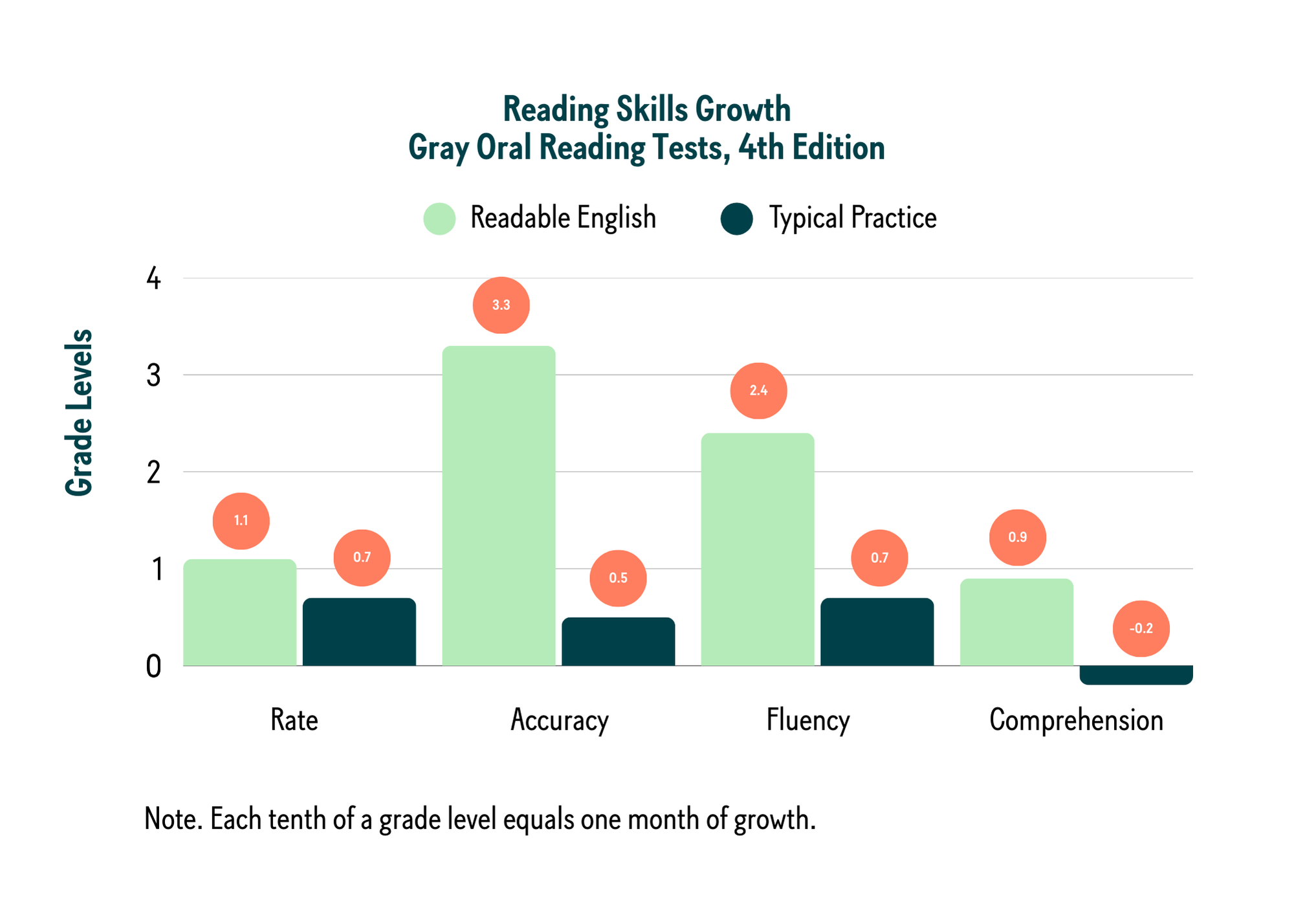
Peer-reviewed studies and real classroom implementations show that students receiving Readable English interventions experience accelerated gains in reading accuracy, fluency, and comprehension.
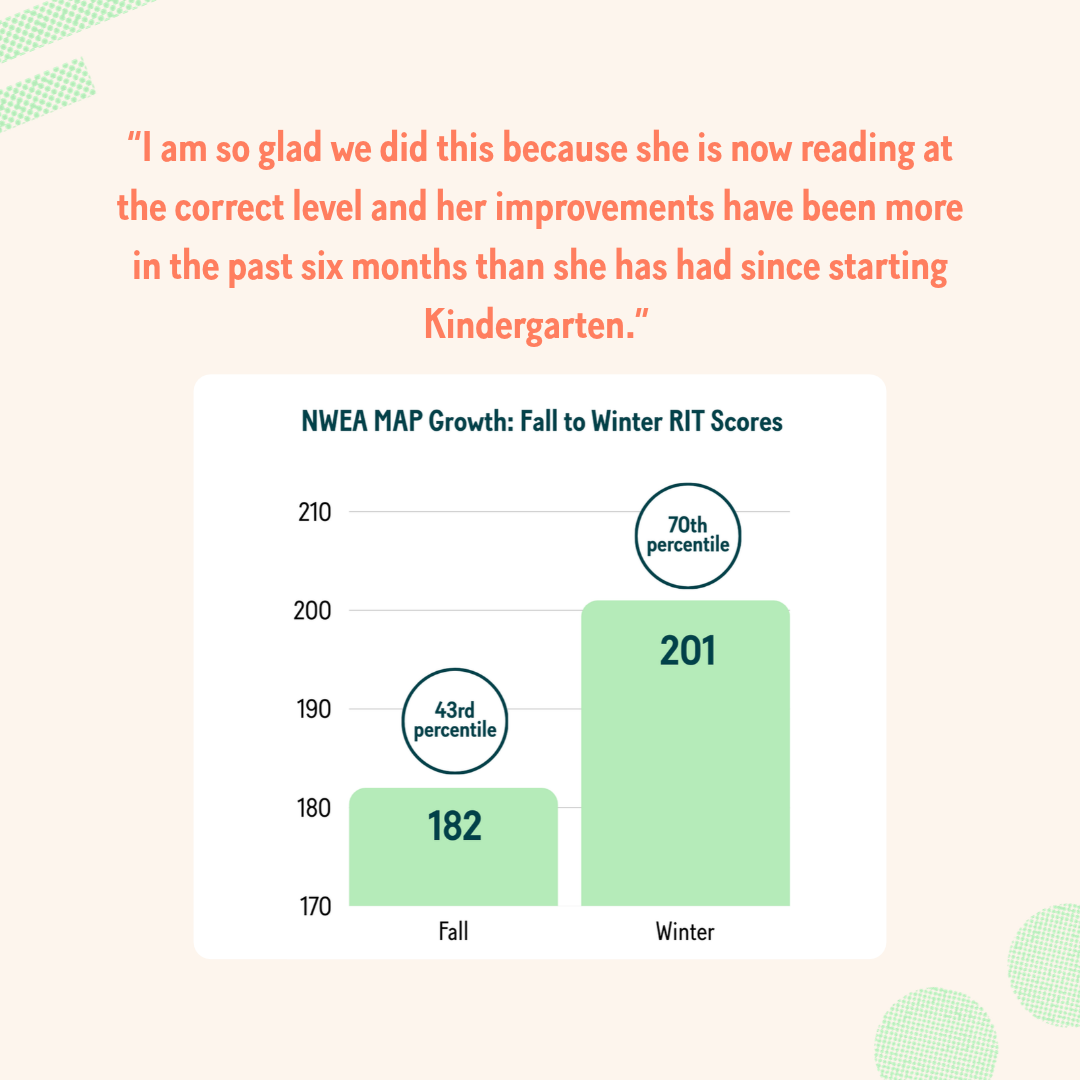
Featured Case Study: Transforming Naomi’s Reading Journey
Facing severe reading difficulties and lagging behind her peers, Naomi struggled to access grade-level content. With the Readable English visual approach, she unlocked complex text, eliminated visual guessing habits, and gained the confidence to read aloud in class.